








|
African-American History Film Clips
What the Army Has Taught Us About Racial Integration (Coronet Magazine, 1960)
Inasmuch as racial integration was the social goal for a vast majority of Americans in 1960, this article made it clear that racial harmony in the U.S. Armed Forces was not simply the goal, it was the reality. Written by a journalist who visited as many as ten U.S. Military establishments throughout Europe and North Africa in order to see how President Truman's Executive Order 9981 had effected American military culture. He was surprised to find that although Truman had banished Jim Crow from the armed services in 1948, the Defense Department had not seen fit to integrate the on-base housing and schools until 1954. Perhaps this is a good example of the differences between the Department of Defense and the actual military: the DoD is run by civilians and the military is run by generals and admirals who are attuned to obeying the orders of their commander-in-chief, whoever that may be.
The article is filled with pleasing anecdotes about how easily racial integration was manifested and how quickly the bonds between men of all shades were quickly established.
Read about racism in the U.S. Army of W.W. I
| The Negro's Contribution to American Arts (Literary Digest, 1917)
The attached piece is an abstract of an article that first appeared in THE NEW YORK EVENING POST in 1917. The original article was penned by NAACP secretary James Weldon Johnson (1871 – 1938), who was also a respected writer, anthologist, educator and diplomat; in this piece he listed all the various artistic contributions that the African-American community had made to the world of dance and music. Johnson was quick to point out that American popular culture was enjoyed the world-over and these dance steps and catchy tunes were not simply the product of the Anglo-Saxon majority:"I believe the Negro possesses a valuable and much-needed gift that he will contribute to the future American democracy. I have tried to point out that the Negro is here not merely to be a beneficiary of American democracy, not merely to receive. He is here to give something to American democracy. Out of his wealth of artistic and emotional endowment he is going to give something that is wanting, something that is needed, something that no other element in all the nation has to give."
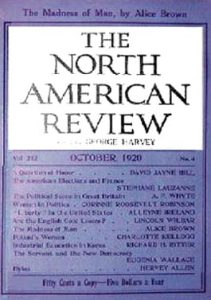
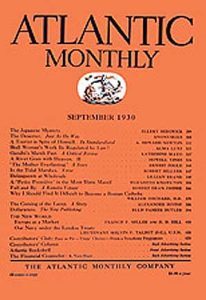
| What the Negro Means to America (Atlantic Monthly, 1929)
In the attached article Count Hermann Alexander Keyserling (1880 – 1946), German philosopher and social critic, wrote about those uncommon cultural elements within the African-American culture that renders American blacks as an unprecedented, unique cultural force in the world:
"There has never been anything like the American Negro in Africa, nor is there anything like him in the West Indies or in South America."
| |
| The First Elected African-American Judge (Literary Digest, 1924)
An article about Albert B. George (1873 - ?) of Chicago, the first African-American to be elected as a municipal court judge:"An epochal scene will presently be enacted in one of the divisions of Chicago's Municipal Court, pointed out several editors, when there will ascend to its bench Albert Baily George, the Negro just elected Municipal Judge on the Republican ticket by 470,000 votes. In the past a Negro here and there has been appointed judge, notably Robert H. Terrell (1857 - 1925) of Washington, we are told, but this is the first election of one to a regular judicial office."
"Judge George's ancestors were slaves in old Virginia. His success, says the CHICAGO TRIBUNE, 'has sent a thrill of hope through the black belts - a new incentive to work and decent living.; It is considered 'a milestone in the journey of the negro race out of the wilderness of slavery, an application of the principles of democracy which may point the way to better things for both races.'"
| MORE ARTICLES >>> PAGE: * 1 * 2 * 3 * 4 * > NEXT |
|
|