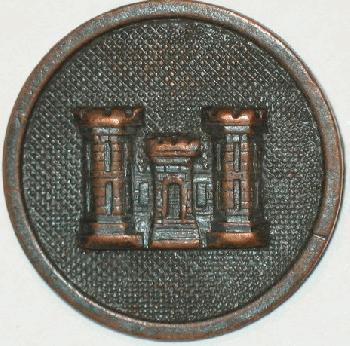
The U.S. Sixth Regiment of Engineers were rebuilding roads on the Somme when the German army came across no-man’s land on March 21, 1918 (a.k.a. Kaiserschlacht: “the Kaiser’s battle) and they were quickly ordered to go in support of a nearby British regiment. These engineers were the first Americans to come under German fire and their story is told here by Private E.P. Broadstreet, who was there.
Another first-hand account of that day can be read in an interview that appears in this book: Make the Kaiser Dance .
.
When the Doughboys began arriving in France the infantry and artillery were kept in the rear areas and taught the necessities of World War One trench warfare. This was not the case with engineering units of the A.E.F. who were dubbed “noncombatants” and dispatched hither and yon to attend to those duties deemed appropriate for men with such training.
The experiences of the 108th Engineers (Thirty-Third Division) during the Argonne campaign is also told in this article.

6th Engineers + WW16th Engineers + March Offensive 1918March 1918 Offensive American ParticipationGerman Offensive March 1918 + American Engineers108th Regiment of Engineers of the 33rd Division in France108th Engineers + Argonne Offensive 1918108th Engineers Attached to 4th British Army France 1918Private E.P. Broadstreet jr + Stars and Stripes Article 1918Private EP Broadstreet 6th Engineers WW 1British General AEF Harmon + France 191812th US Engineers + 5th British Army France 1918Magazine Articles About WW1


6th Engineers + WW16th Engineers + March Offensive 1918March 1918 Offensive American ParticipationGerman Offensive March 1918 + American Engineers108th Regiment of Engineers of the 33rd Division in France108th Engineers + Argonne Offensive 1918108th Engineers Attached to 4th British Army France 1918Private E.P. Broadstreet jr + Stars and Stripes Article 1918Private EP Broadstreet 6th Engineers WW 1British General AEF Harmon + France 191812th US Engineers + 5th British Army France 1918Magazine Articles About WW1