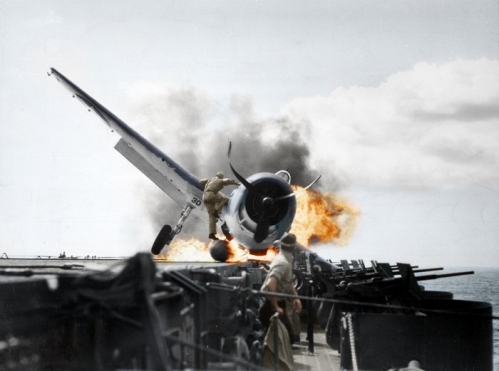
When considering the global events of 1941 – 42, many historians largely agree that the most laudable aspect of American leadership during that period following the December 7th attack on Pearl Harbor was that the Brass Hats who ran the U.S. military tended not to panic when weighing their options – but maintained a calm that allowed them to assess their liabilities and strengths while planning their strategy.
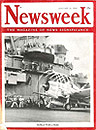
Having lost as many ships as they did during the attack, the American navy was barely equal to their Asian counterpart: the Japanese Navy had ten aircraft carriers while the U.S. had only seven, and seldom more than three or four to available for deployment in the Pacific in 1942.
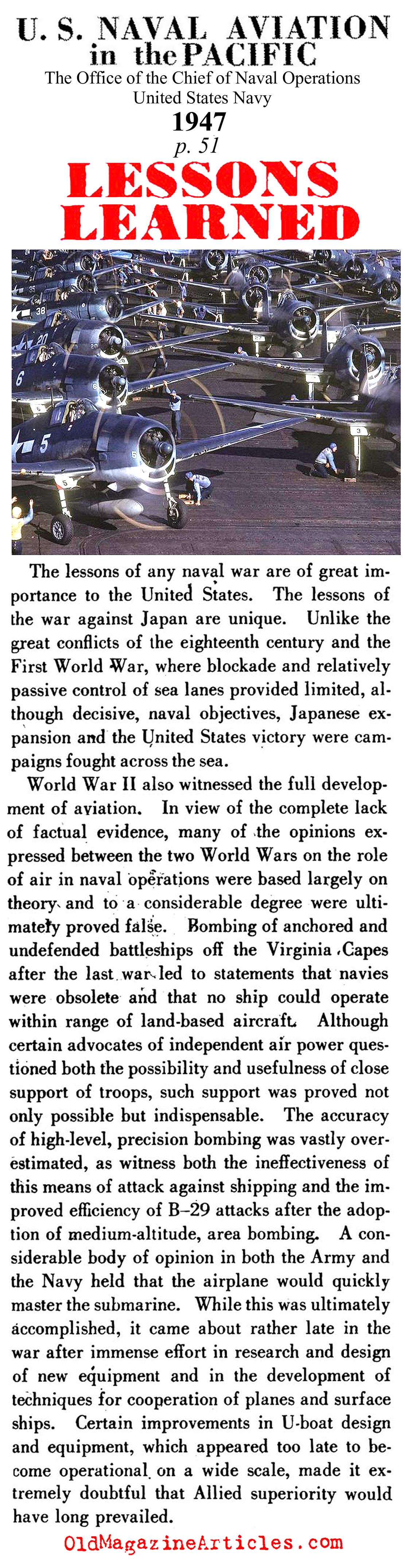
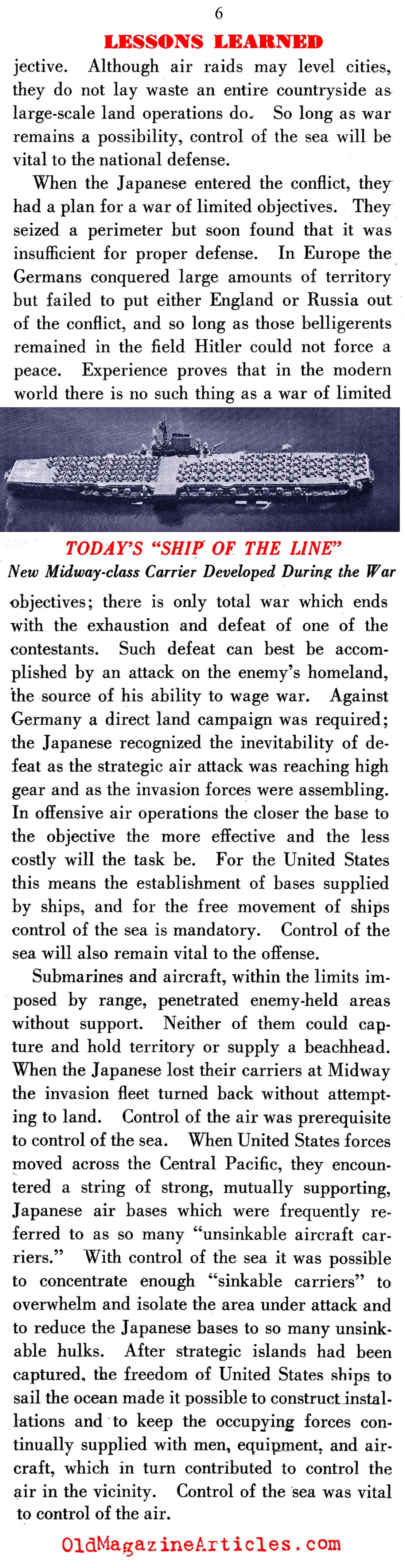
This 1947 report was written by the office of the Chief of Naval Operations regarding what the U.S. Navy learned about carrier warfare during the four year war in the Pacific.
Click here to read about the rise of naval aviation.
To read articles about W.W. II submarines, Click here.
Articles about the daily hardships in post-war Germany can be read by clicking here.

Carrier War in the PacificNaval Aviation WW 2US Naval Aviation HistoryUS Naval Aviation During WW2US Naval Aviation 1941-1945Chief of US Naval Operations Report 1947Chief of US Naval Operations Report Regarding War in the PacificChief of US Naval Operations Report Regarding Naval Aviation During WW 2Aircraft Carrier Lexington HistoryAircraft Carrier Enterprise HistoryAircraft Carrier Ranger HistoryAircraft Carrier HistoryBattle of Leyete Gulf WW2Post-War History of US Navy Pacific Theater War 1947US Navy WW2 South Pacific BattleUS Navy Report Concerning WW 2 Pacific TheaterCarrier War World War 2
Carrier War in the PacificNaval Aviation WW 2US Naval Aviation HistoryUS Naval Aviation During WW2US Naval Aviation 1941-1945Chief of US Naval Operations Report 1947Chief of US Naval Operations Report Regarding War in the PacificChief of US Naval Operations Report Regarding Naval Aviation During WW 2Aircraft Carrier Lexington HistoryAircraft Carrier Enterprise HistoryAircraft Carrier Ranger HistoryAircraft Carrier HistoryBattle of Leyete Gulf WW2Post-War History of US Navy Pacific Theater War 1947US Navy WW2 South Pacific BattleUS Navy Report Concerning WW 2 Pacific TheaterCarrier War World War 2