




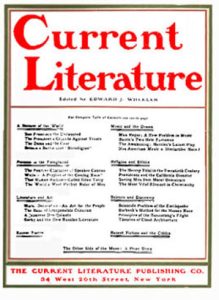




















“I had been gassed rather severely in the Argonne and I naturally put my [anxious] condition down to some sort of physical ailment. But this was exploded by a visit to my physician, who told me that, outside of a somewhat rundown condition, I was in better physical shape than I had been, so far as he knew… Surely something was wrong… The change was in me, and I knew it… The restlessness, that is as good a word for it as any, became more tangible the following day when I attempted to read a novel by Dickens, an author who had always been the source of untold pleasure, and for the life of me I could not get my mind on the story. I gave up in disgust in ten minutes. Then the thought came to me that I would love to see a good musical comedy and I got a front seat for the best in town – and walked out before the first act was over… I am continually curbing my irritable temper, because on the least provocation I jump irascibly at my best friends; my fingernails are bitten to the quick – and last, but by no means least, I am addicted to fits of melancholia (depression) that come from nowhere at all and remain with me for hours at a time.”
Click here to read a post-W.W. I poem about combat-related stress…


