


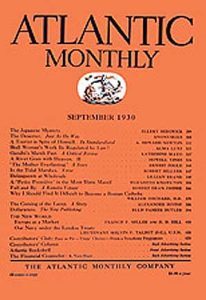




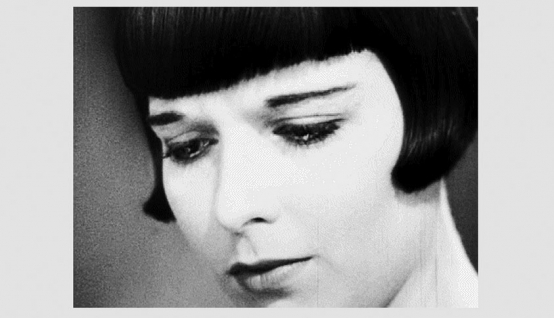
In 1923, literary critic Helen McAfee found that she had a good deal to say concerning the books of the First World War and the new spirit (of pessimism) that the war had created:
“The last five years have seen an acute spiritual deflation. Most of us who had not been previously so affected were swept off our feet by the terrible spring of 1918 into an apocalyptic state in which an intense idealism mounted to meet the tragedy of the last great Allied retreat.”
Decades later, in 1951, a newspaper man named Louis B. Seltzer (1897 – 1980), editor of The Cleveland
Press, attempted to put his finger on the changes that he, and so many others, so keenly felt in an editorial titled
Can’t We Tell Right from Wrong? As you will read, Seltzer was not able to name or identify this general sense of dissatisfaction, but he was able to figure out when it descended upon the nation – after the war. His contemporaries understood precisely what he was referring to – the next day his column was reprinted in 40 newspapers across the nation.
Some people think it dates back to the First World War…
There are those who think science and the assembly line
started it as we turned into the 20th Century…
Some blame the philosophy of “Sufficient Unto the Day Is
the Evil Thereof”, induced by depressions and wars…
The analysts whose job it is to examine our national
behavior … do not agree among themselves.
About this, though, they do agree.
Something has happened to us as a people – something
serious.
We have gained much in the last half-century.
We have lost something also…
Has what we gained been more important than what
we lost?
What is wrong with us?…
It is in the air we breathe. The things we do. The
things we say. Our books. Our papers. Our theater. Our
movies. Our radio and television. The way we behave.
The interests we have. The values we fix.
We have everything. We abound with all of the things
that make us comfortable. We are, on the average, rich
beyond the dreams of the kings of old.
We lead in everything – almost.
Yet … something is not there that should be – some-
thing we once had…
Stalin, like Hitler, thinks we’re soft, preoccupied with
with material things.
Are we our own worst enemies?
Should we fear what is happening among us more than what
is happening elsewhere?…
Why has a moral deterioration set in among us that brings
corruption, loose behavior, dulled principles, subverted
morals, easy expediencies, sharp practices?
What corrupts our top people?
What has taken away the capacity for indignation that
used to rise like a mighty wave and engulf the corruptors
– the corruptors of public office, of business, of youth,
of sports.
What is it?
No one seems to know. But everybody seems to
believe it is upon us. No one seems to know what to do to
meet it. But everybody worries as the father of a ten-year
-old son, who this morning said:
“What do I do? I am concerned about my son. We try to
teach him right from wrong, but the air is filled with
to-day’s easy interpretations of what is right and wrong”…
Maybe the farmer of years ago, looked with troubled eye
at the skies upon which he depended so much for providen-
tial kindness, had a greater faith than we who rise vertically
many miles into the air to find out what really goes
on Up There…
The most famous poem that addresses the theme of disillusion is the The Waste Land (1922), by T.S. Eliot, read about it here…
If you would like to read another 1920s article about the disillusioned post-war spirit, click here.

![The Literature[br] of Disillusion](https://oldmagazinearticles.com/pdf/WW1-writing_0001.jpg)
![The Literature[br] of Disillusion](https://oldmagazinearticles.com/pdf/WW1-writing_0002.jpg)
![The Literature[br] of Disillusion](https://oldmagazinearticles.com/pdf/WW1-writing_0003.jpg)
![The Literature[br] of Disillusion](https://oldmagazinearticles.com/pdf/WW1-writing_0004.jpg)
![The Literature[br] of Disillusion](https://oldmagazinearticles.com/pdf/WW1-writing_0005.jpg)
![The Literature[br] of Disillusion](https://oldmagazinearticles.com/pdf/WW1-writing_0006.jpg)
![The Literature[br] of Disillusion](https://oldmagazinearticles.com/pdf/WW1-writing_0007.jpg)
![The Literature[br] of Disillusion](https://oldmagazinearticles.com/pdf/WW1-writing_0008.jpg)
![The Literature[br] of Disillusion](https://oldmagazinearticles.com/pdf/WW1-writing_0009.jpg)
![The Literature[br] of Disillusion](https://oldmagazinearticles.com/pdf/WW1-writing_0010.jpg)
![The Literature[br] of Disillusion](https://oldmagazinearticles.com/pdf/WW1-writing_0011.jpg)
![The Literature[br] of Disillusion](https://oldmagazinearticles.com/pdf/WW1-writing_0012.jpg)
![The Literature[br] of Disillusion](https://oldmagazinearticles.com/pdf/WW1-writing_0013.jpg)
![The Literature[br] of Disillusion](https://oldmagazinearticles.com/pdf/WW1-writing_0014.jpg)
![The Literature[br] of Disillusion](https://oldmagazinearticles.com/pdf/WW1-writing_0015.jpg)
![The Literature[br] of Disillusion](https://oldmagazinearticles.com/pdf/WW1-writing_0016.jpg)
![The Literature[br] of Disillusion](https://oldmagazinearticles.com/pdf/WW1-writing_0017.jpg)
![The Literature[br] of Disillusion](https://oldmagazinearticles.com/pdf/WW1-writing_0018.jpg)
![The Literature[br] of Disillusion](https://oldmagazinearticles.com/pdf/WW1-writing_0019.jpg)
![The Literature[br] of Disillusion](https://oldmagazinearticles.com/pdf/WW1-writing_0020.jpg)
![The Literature[br] of Disillusion](https://oldmagazinearticles.com/pdf/WW1-writing_0021.jpg)