












Sea Power Magazine Articles
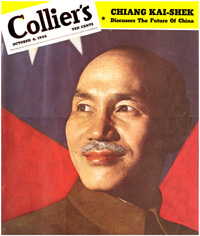
Collier's Magazine Articles
Rob Wagner's Script Magazine Articles
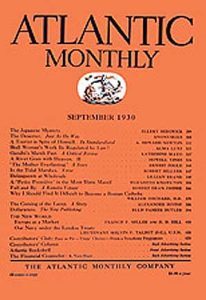
The Atlantic Monthly Articles
Harper's Bazaar Magazine Articles
The Flapper Magazine Articles
Film Daily Magazine Articles
PM Tabloid Articles
La Baionnette Articles
Theatre Arts Magazine Articles
Outlook Magazine Articles
Men's Wear Magazine Articles
The American Legion Weekly Articles
The Saturday Evening Post Articles
Stage Magazine Articles
The New York Times Articles
Touchstone Magazine Articles
Hearst's Sunday American Articles
Direction Magazine Articles
Harper's Weekly Articles
Ken Magazine Articles
Freedom's Triumph Articles
The Film Spectator Magazine Articles
The Saturday Review Articles
Creative Art Magazine Articles
Confederate Veteran Magazine Articles
47 Magazine Articles
The Smart Set Articles
The American Legion Monthly Articles
Outing Magazine Articles
The New Republic Articles
Trench Warfare Articles
Life Magazine Articles
The National Park Service Articles
Newsweek Articles
G.I. Joe Magazine Articles
Leslie's Magazine Articles
The North American Review Articles
Vogue Magazine Articles
Punch Magazine Articles
The Dial Magazine Articles
Current Literature Magazine Articles
Photoplay Magazine Articles
Liberty Magazine Articles
Pic Magazine Articles
People Today Magazine Articles
Vanity Fair Magazine Articles
Confidential Magazine Articles
Click Magazine Articles
Scribner's Magazine Articles

World War Two

Find old World War 2 articles here. We have great newspaper articles from wwii
take a look today!

Wainwright of Corregidor
(Newsweek Magazine, 1942)

“Wainwright never had a fighting chance in his last command in the Philippines… But in those last few days he demonstrated his fine soldiery demeanor, leadership, courage, and resourcefulness.”

Last Stand on Corregidor
(Newsweek Magazine, 1942)

“The Fall of Corregidor (May 6, 1942) marked the end of an epic fight that won acclaim from Allied leaders the world over. The most heartfelt tribute came from Gen. MacArthur in Australia: ‘… But through the bloody haze of the last reverberating shot I shall always seem to see the vision of its grim, gaunt and ghostly men, still unafraid.'”

Nazis on Trial
(Collier’s Magazine, 1946)

War correspondent Martha Gellhorn (1908 – 1998) filed this article concerning her observations and insights gleaned at the Nuremberg Trials:


“The second charge against these twenty-one men was crimes against peace. War is the crime against peace. War is the silver bombers, with the young men in them, who never wanted to kill anyone, flying in the morning sun over Germany and not coming back. War is the sinking ship and the sailors drowning in a flaming sea on the way to Murmansk. War is the casualty lists and bombed ruins and refugees, frightened and homeless and tired to death, on all the roads.”

Advertisement

Use shortcode [oma_ad position="summary_top"] (or other position) in your theme or widgets to display OMA Promotions here.

More Letters from the German Home Front
(American Magazine, 1942)

“The information in letters found on the German dead, intimate and personal as it is, leads to some striking deductions. The people inside Germany hate the war and want it to end. They are tired of hardships, sick of sacrifice. They lament the moral disintegration of their young women; they shudder at air raids; they weep over their dead. But nowhere do they betray the least suggestion of German guilt or regret for horrors which the German armies perpetrate on conquered countries. Hard as is their life, they know neither starvation nor desperation. Nor do they expect Germany to lose the war. To expect them at this time to revolt against Hitler is as futile and puerile to expect the Fuehrer to live up to his promises or the treatise he signs.”

One Year of Military Expansion
(Newsweek Magazine, 1942)

When President Franklin Roosevelt declared war on December 8, 1941 – he was not the only one to do so; judging by the content of the attached article, and numerous others on this site, 100,000 other Americans did the same thing. This article is about the rapid growth of the United Sates military that took place between December of 1941 through December of 1942 – and boy, did it grow.

Advertisement

Use shortcode [oma_ad position="summary_top"] (or other position) in your theme or widgets to display OMA Promotions here.

Japan’s Industrial Shortcomings
(American Legion Magazine, 1943)

This article said nothing to the American home front readers that they didn’t already know, in fact the Associated Press ran a similar article that appeared on numerous front pages on December 8th of 1941. Simply stated, it reported that the Japanese were totally incapable of maintaining prominence in a war against the United States due to the fact that Japan’s war industry was far too small and they had few natural resources to rely upon. The reason that the subject was broached again in early 1943 was because it was all beginning to appear quite true. During the first 13 months of the war the Japanese let loose with everything they had, now they were on the defensive, and discovering that their industry was woefully inadequate.


Articles about the significance of 1943 can be read here can be read here and here…

1943: The Year the Japanese Had Shot Their Wad
(American Legion Magazine, 1943)

“Japan in the first 13 months of war let loose virtually everything she had against us. Now she’s feeling the pinch, for her lack of industrial capacity makes replacements slow, and she hasn’t the savvy to keep up with her opponents in improving plants and weapons. This is particularly true in the all-important matter of aircraft.”

When Bushido Took a Back Seat
(Collier’s Magazine, 1945)

During the closing days of the Okinawa campaign, Japanese infantry decided to treat the much-ballyhooed Bushido warrior code as if it was a plate of week-old sushi.


“The mass-surrenders were a circus for our troops. It became a race to see which outfit could take the most prisoners. And Major General Lemuel C. Shepard’s Sixth Marine Division won the championship with 3,279 prisoners, while Major General Archibald V. Arnold’s 7th Army Division was runner-up with 2,627.”


More about the Battle of Okinawa can be read here.

Advertisement

Use shortcode [oma_ad position="summary_top"] (or other position) in your theme or widgets to display OMA Promotions here.

Why the Japanese Didn’t take Prisoners
(Liberty Magazine, 1942)

Hallett Abend (1884 – 1955) was an American journalist who lived in China for fifteen years. He covered the Sino-Japanese War during its early years and had seen first-hand the beastly vulgarity of the Japanese Army. After Pearl Harbor, the editor at Liberty turned to him in hopes that he would explain to the American reading public what kind of enemy they were fighting:


“In four and a half years of warfare [in China], the Japanese have taken almost no prisoners… Chinese prisoners of war are shot.”

The Doughboy in the Pacific Theater
(Liberty Magazine, 1945)

The U.S Marine Corps is not in the practice of sending their oldest members into harm’s way – they aren’t now, and they weren’t in 1942. But when they imparted this information to Gunnery Sergeant Lou Diamond (1890 – 1951), he would have none of it – the mere idea that the world was to be at war, and he would be excluded: not going to happen:


“Lou roared his way through the battles of Guadalcanal and Tulagi and did much to back up the Marine Corp’s contention that he is far and away the the most expert mortar sergeant in any branch of the service.”

Advertisement

Use shortcode [oma_ad position="summary_top"] (or other position) in your theme or widgets to display OMA Promotions here.

Planning an Assault
(Coronet Magazine, 1945)

Here is an interesting article from World War Two that goes into some detail explaining what is involved when a lieutenant colonel in an infantry regiment presents his plan of attack on a German town that is heavily defended. We hear him as he addresses the junior officers who will do the heavy lifting, and we get a sense of their concerns. Few reporters have ever paid any attention to this aspect of an assault.

Destroying Germany from Above
(Collier’s Magazine, 1943)

“The Reich is being methodically pulverized. The Eighth U.S. Air Force by day and the R.A.F. by night have only begun their deadly round-the-clock job. The coming months will see them unleash a fury that surpasses all the world’s earthquakes.”

Life on a B-17 Base in England
(Collier’s Magazine, 1943)

This is an amazing article that recalls the open-all-night cities that were the B-17 bases in Britain during World War Two. Such were the lives of the ground crews, who worked all night and then found sleep impossible – preferring to stay-up and stare at the skies in anticipation for their returning bombers.


“A crew chief stumbles past you on his way to the hangar. He’s been going seventy-two hours without taking his shoes off; his face is unshaven, and his eyes look like holes burned in a blanket.”

Advertisement

Use shortcode [oma_ad position="summary_top"] (or other position) in your theme or widgets to display OMA Promotions here.

The Japanese Planned to Fight Until the End
(PM Tabloid, 1945)

The American magazines and newspapers of late April and early May, 1945, were all about the end of the German Army and now its time to clobber the Japanese. The attached article, from May 6, addressed the subject that this would not be an easy task. If the Atom Bomb hadn’t come along, the Pentagon believed the war would have gone on for another two or three years, and the Japanese were determined to fight until the end:


“The influential Tokyo paper Sangyo Kezei said editorially on April 30: ‘Japan will fight on regardless of any sudden changes in Europe.'”


A similar article can be read here.

Advertisement

Use shortcode [oma_ad position="summary_top"] (or other position) in your theme or widgets to display OMA Promotions here.

Scroll to Top